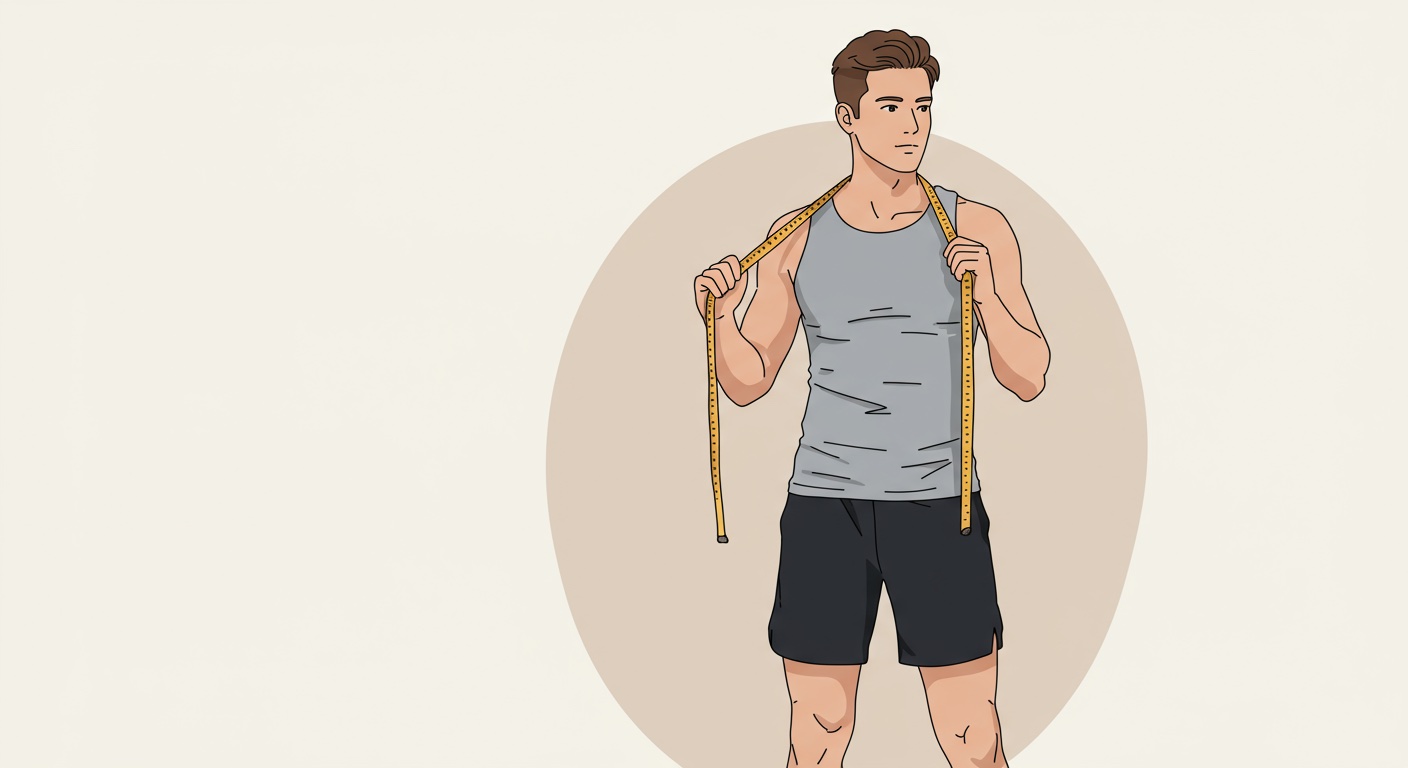
About one in four pieces of online apparel gets returned, and bad fit is the top reason. If you searched how to measure your body for clothes, start here: five measurements, five minutes, and you'll stop guessing your size every time you shop online!
What you need
- A soft tape measure (the kind tailors use, not a metal one).
- Snug clothing or just underwear: no hoodies, no thick layers.
- A mirror, or a friend who won't move the tape on you.
- Your phone, to jot the numbers down so you actually have them when you're shopping.
How to measure your body for men's clothing: the 5 that matter
These are the numbers nearly every men's size chart wants, in the order it makes sense to take them.
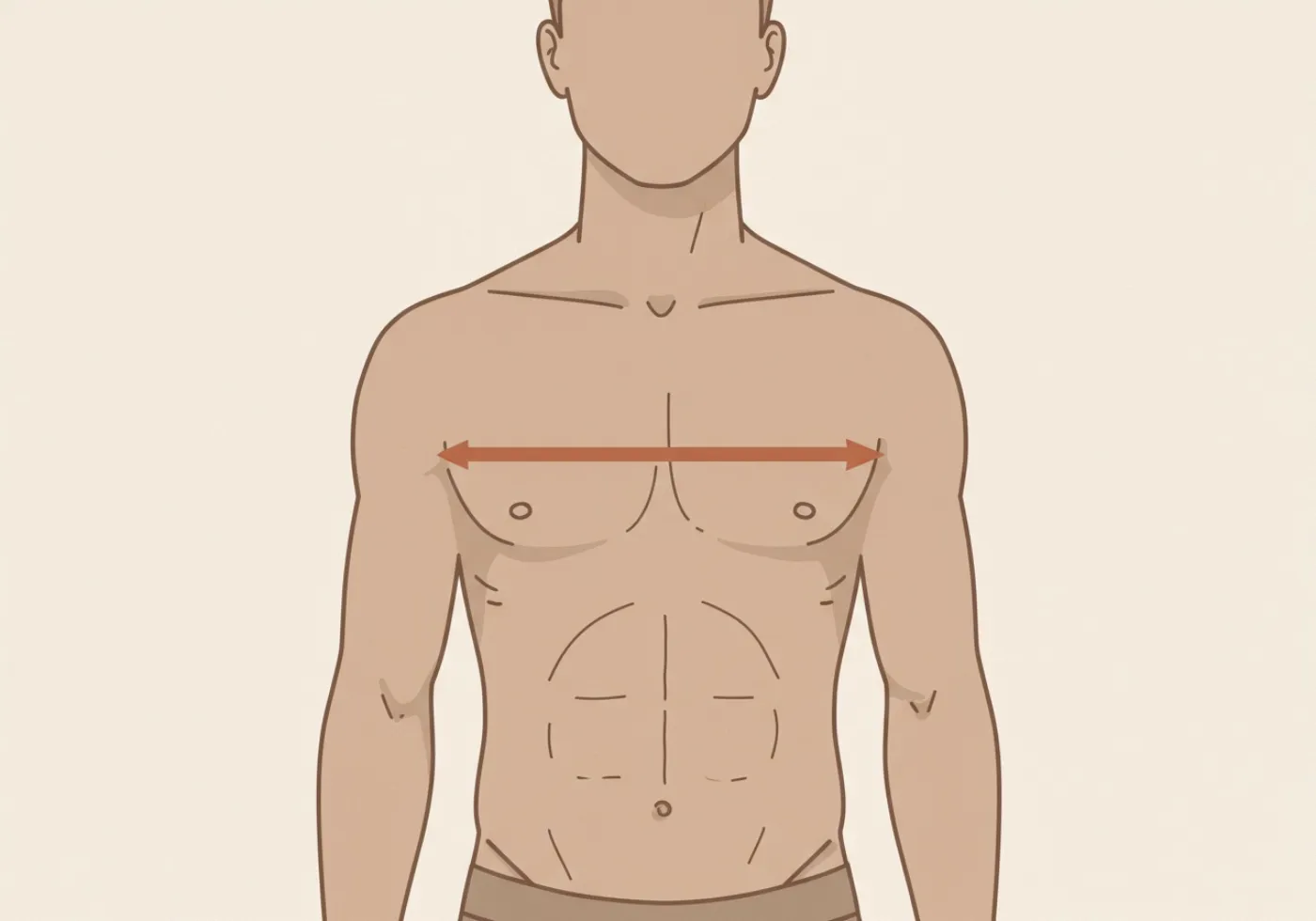
1. Chest
Chest size is what shirts, jackets, and outerwear are built around. If this is off, nothing about the fit will feel right.
- Stand relaxed, arms at your sides.
- Wrap the tape around the fullest part of your chest, just under your armpits.
- Keep the tape level all the way across your back, not sloping down.
- Breathe normally and read the number. Don't suck in.
2. Shoulder width
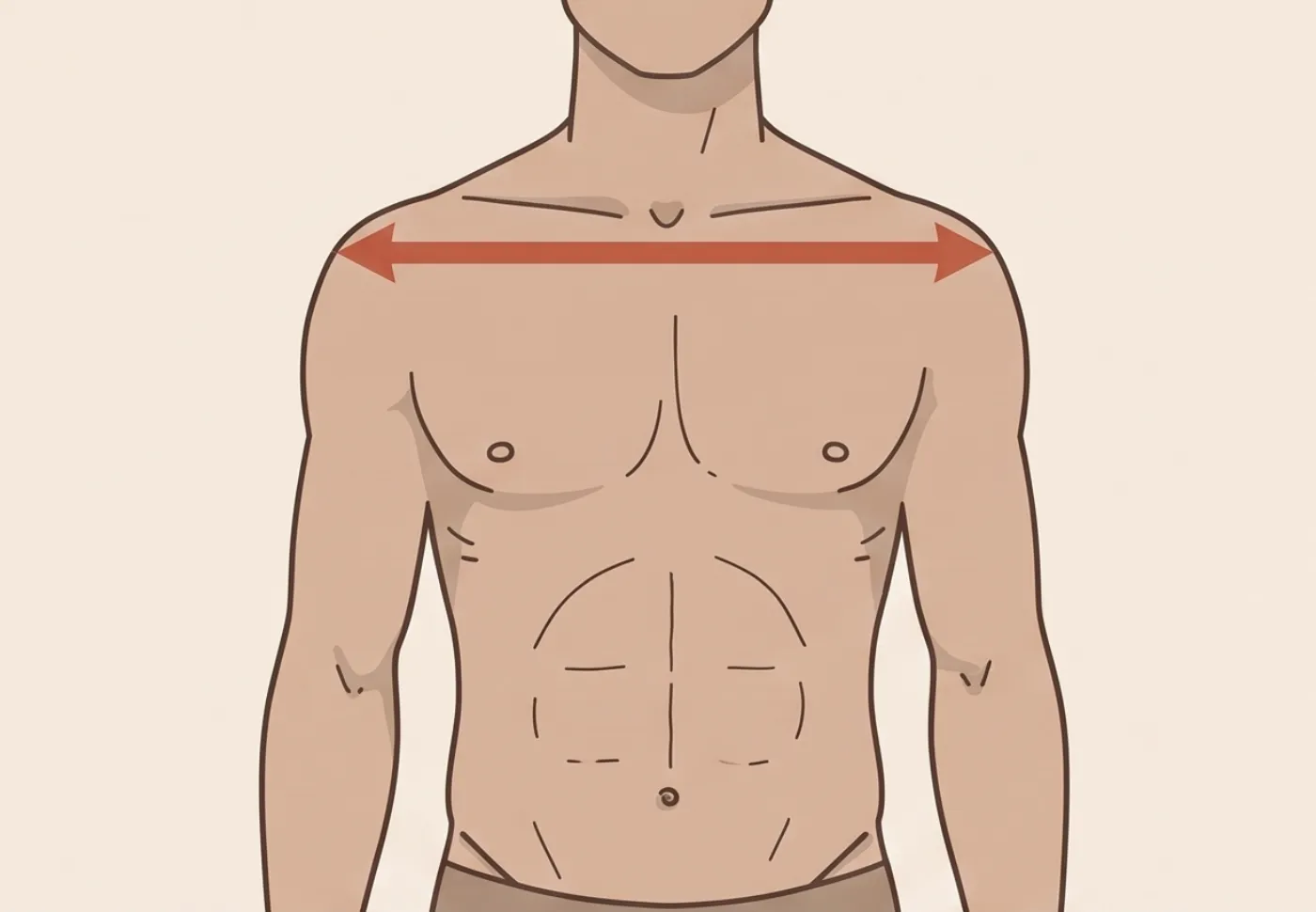
Shoulder width is what determines whether a shirt actually sits on your frame or slides off it. Tailored shirts and blazers live or die by this one.
- Turn your back to a mirror (or have someone help).
- Find the bony point on the outer edge of each shoulder.
- Run the tape straight across your upper back from one outer shoulder point to the other.
- Keep it flat. Don't curve it over the shoulders.
3. Waist (natural waist, not where your pants sit)
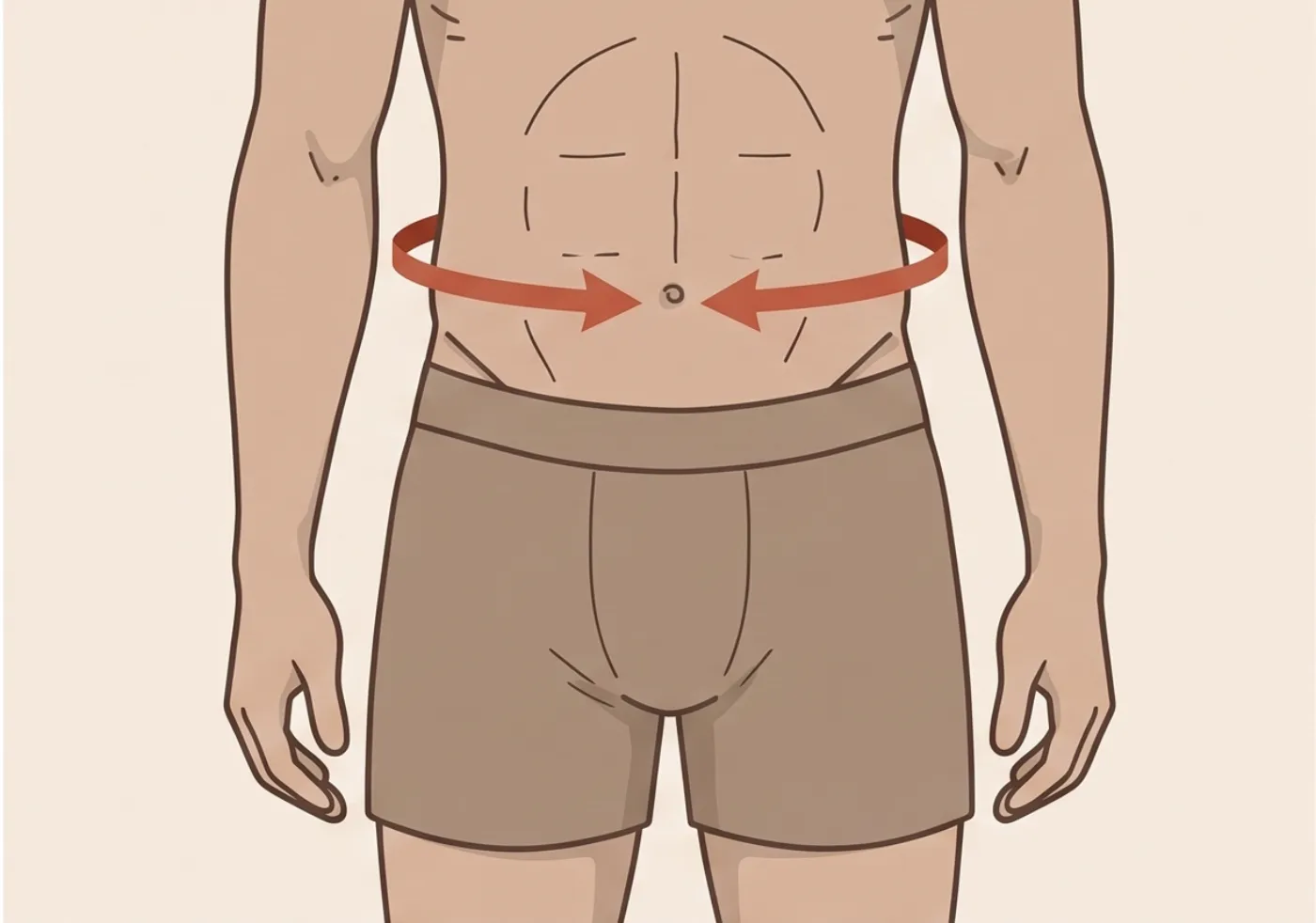
This is where most people get it wrong. Your natural waist is the narrowest part of your torso, above your belly button, usually an inch or two below your ribs. It is not the line where your jeans usually sit.
- Stand normally, no sucking in.
- Find the narrowest point above your belly button by running your hands up your sides.
- Wrap the tape there, horizontal all the way around.
- Tape should sit flat against skin: snug, not tight.
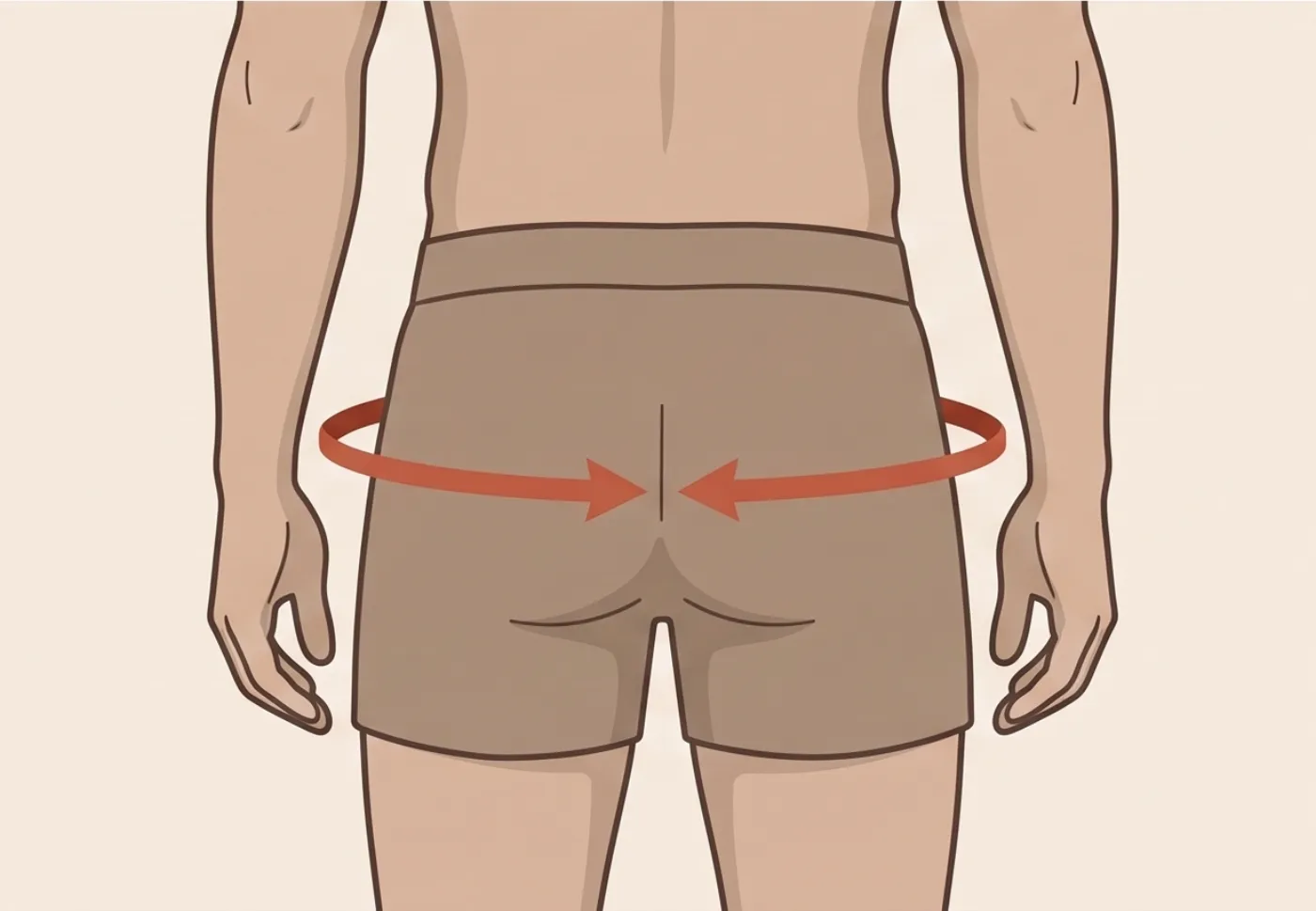
4. Hip / seat
Hip measurement is what pants, shorts, and tailored trousers are sized off of, even when the chart just says "waist." If pants fit at the waist but feel tight in the seat, your hip is the number you've been missing.
- Stand with your feet together.
- Wrap the tape around the fullest part of your seat (your glutes, roughly).
- Keep the tape level all the way around.
5. Inseam
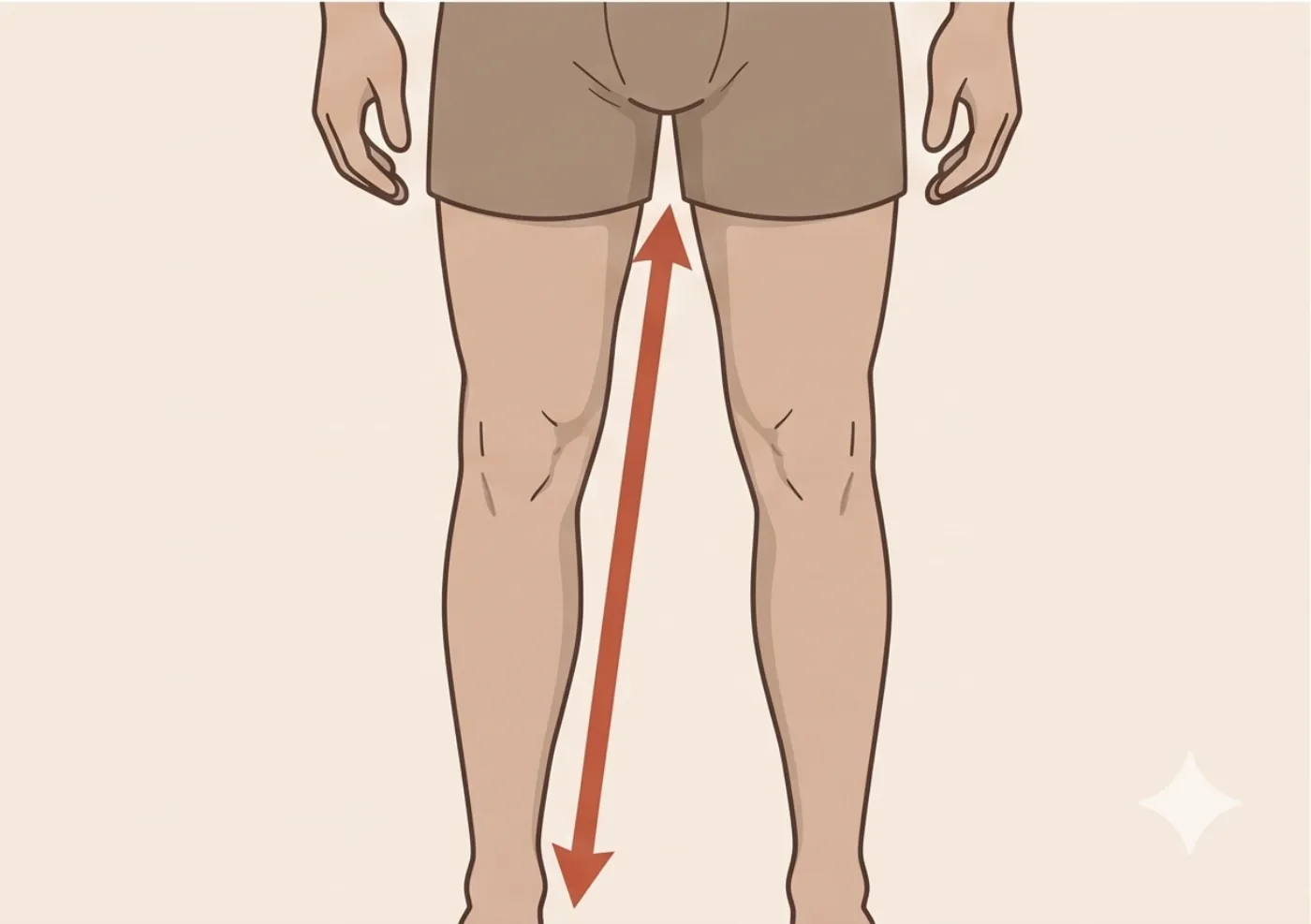
Inseam is the inside leg length from crotch to ankle. Size charts use it for pants length.
- Stand with your feet slightly apart.
- Run the tape along the inside of your leg, from the crotch to the ankle bone.
- Read the number at the ankle. That's your inseam for filtering pants online.
Don't want to mess with a tape? Use Fitly
If breaking out a tape measure isn't your thing, Fitly can help you:
- No tape measure? Take 3 photos. Snap a front, side, and back full-body photo, enter your height, and Fitly outputs your shoulder width, chest width, waist diameter, and hip diameter for you.
- Normal tight fitted clothes are ideal for this: a tank top or fitted tee, athletic shorts or compression shorts. The scan reads your shape through the fabric, not your skin.
Uploading full-body image to some service is sketchy, so it's toally fair if you are hesitant. Here's insight on how Fitly uses them:
- No cloud. Your photos aren't saved at all. After estimation they are wiped off the face of the earth. If you need fresh measurements, you take new temporary photos again
- No 3rd party. Measurements run through Fitly's own proprietary pipeline over an encrypted connection, and never saved after completion
- Not used to train models. Fitly doesn't feed your photos into a training dataset, each estimation is idependent and personal to you
For the full breakdown, see is virtual try-on safe and the Fitly privacy policy.
Proactive size matching:
Fitly will use these measurements to proactive compare and match with product specific size guides as you shop, letting you pick your coreect size for any product no matter the brand! If you already know your measurements, you can manually input them and also see this matching process in action! Add Fitly to Chrome and stop guessing.
Common mistakes to avoid
- Measuring over a hoodie or thick t-shirt. Add a layer, add an inch, and now your shirt size is wrong.
- Pulling the tape tight. It should sit flat against your skin, not compress it.
- Measuring the waist at the pant line instead of the natural waist. Pants sit lower than your true waist, and shirt size charts don't.
Measure once, save the numbers, and your fit problem becomes a known quantity instead of a coin flip. If your measurements seem to give you different sizes at different stores, that's not you. That's how brand sizing actually works.