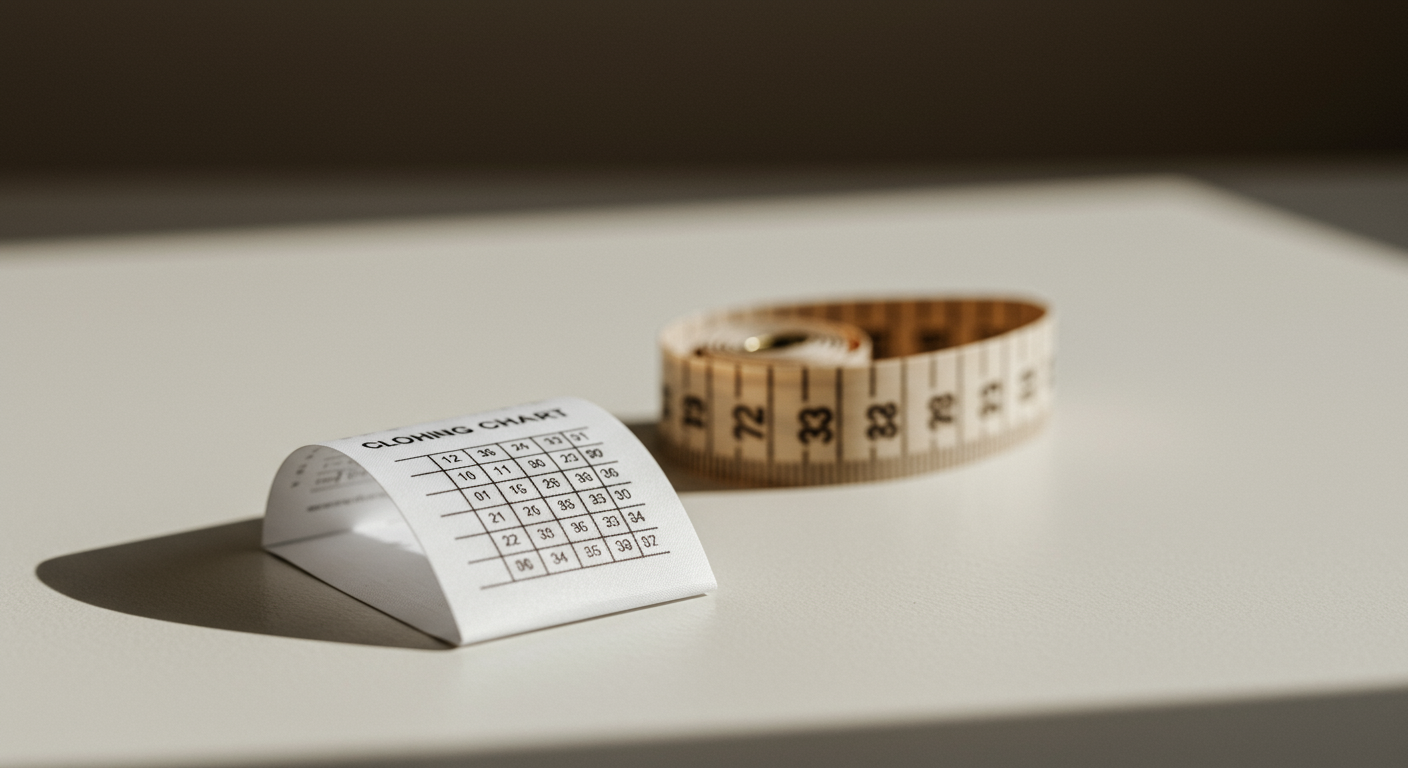
You measured yourself. You opened the size chart. You still have no idea which row is yours. If you searched how to read a size chart online, the problem usually isn't math. It's that charts hide assumptions in shorthand, and nobody explains what half the labels mean.
What a size chart is actually showing you
A size chart is a table of body measurements (in inches or centimeters) mapped to letter or number sizes. Brands use it so factories cut the same proportions every time. For you, it's a filter: find the row where your body numbers fall, order that size.
Charts rarely tell you how the garment will feel. Stretch, drape, and cut live in fit notes below the table. Two people with the same measurements can still want different sizes.
How to read a size chart online: column by column
Work left to right on the row headers, then down to your numbers.
Bust / chest. Fullest part of the chest, tape level across the back. Women's tops, dresses, and jackets use this. Men's shirts and outerwear list chest, not bust, but it's the same measurement line on the tape.
Waist. Natural waist: narrowest part of the torso, usually just above the belly button. Not where low-rise pants sit. If your waist falls between two rows, check whether the brand's fit note says "runs small" or "relaxed fit" before you size up or down.
Hip / seat. Fullest part of hips and seat, roughly 7–9 inches below the natural waist. Critical for pants, skirts, and bodycon dresses. A perfect waist with a tight hip is a sizing fail waiting to happen.
Inseam / length. Inside leg from crotch to ankle for pants. Dresses and coats may list "length" or "height" instead. Convert units if the site toggles US vs metric mid-chart.
Size letter or number. The label you're meant to add to cart once your measurements match a row. If you're between rows, read fit notes before you guess.
Don't have your numbers yet? Start with how to measure your body for women's clothing or the men's measurement guide. Charts only work if the inputs are real.

Fit notes, model stats, and when the chart is lying
Scroll below the table. That's where brands bury the truth.
- "Model is 5'10" and wears size S." Compare the model's listed measurements to yours. If the model is taller and narrower than you, the photo won't match your fit even in the "right" size.
- "Runs small / runs large." Shift one size from what the raw numbers suggest.
- "Stretch" or "oversized." Fabric ease means you may size down for a fitted look or stay true to the chart for the intended silhouette.
- Garment measurements vs body measurements. Some charts list the clothing flat across the chest, not your body. Double-check the header. Flat chest on a size M is not the same as your 38" chest measurement.
Same brand, different fit between categories? That's normal. See why clothes from the same brand fit differently for why one "Medium" is not like another.
When the chart still isn't enough
Charts answer: "Which label matches my tape measure?" They don't answer: "Will this neckline swallow me?" or "Does this length hit where I want on my legs?"
That's the gap between sizing and fit. Numbers can match the chart and still look wrong on you.
See the fit before you checkout
Fitly is a Chrome extension for online clothes shopping. Drag a product photo into the side panel and preview the garment on your body before you buy. Use your measurements to narrow the size row, then use the preview to catch proportion and length issues charts never show.
Fitly can also compare your measurements against a product's size guide while you browse, so you're not flipping between tabs and guessing. Your photos aren't stored permanently after processing. For details, see is virtual try-on safe.
Add Fitly to Chrome and stop treating every size chart like a coin flip.