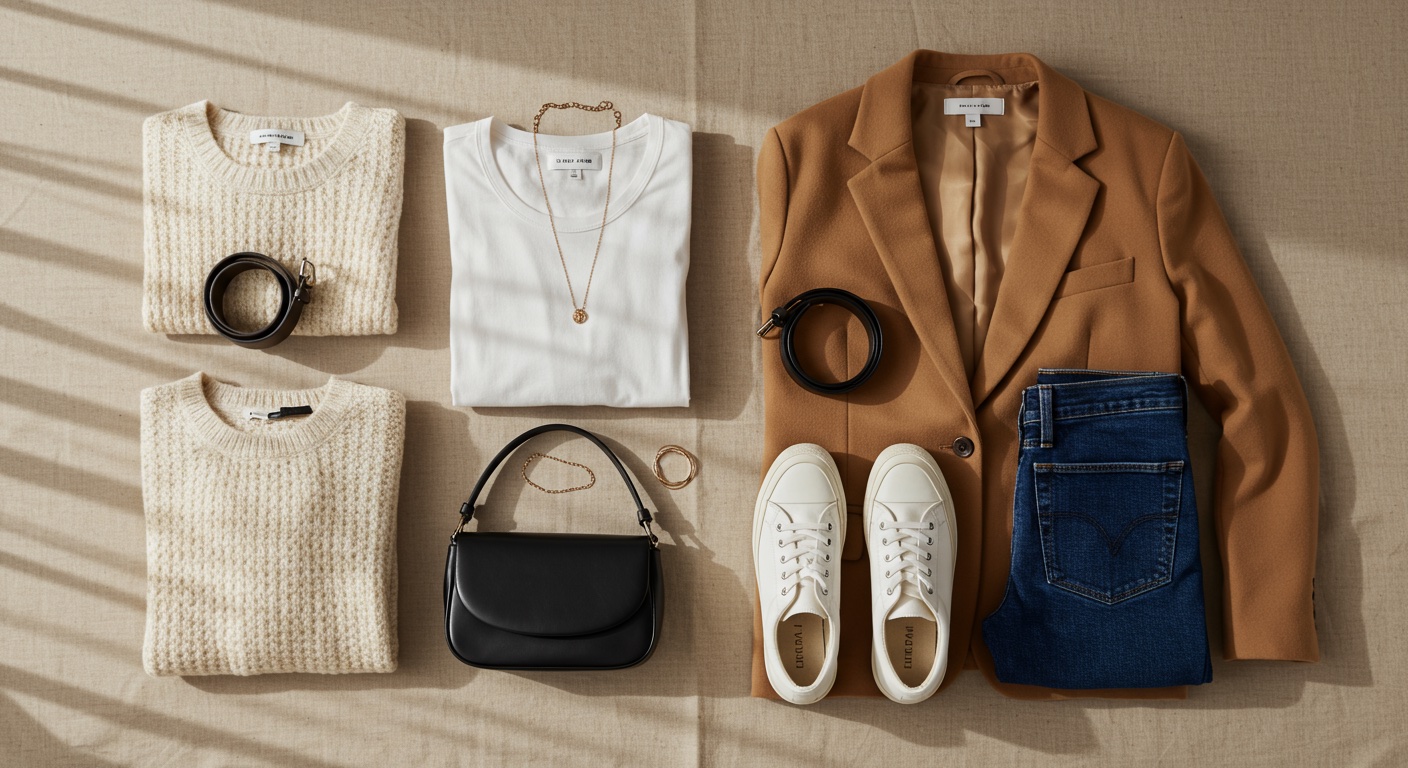
A capsule wardrobe is, in theory, the simplest idea in fashion: a small set of clothes that all work together, so getting dressed stops being a daily problem. In practice, building one is harder than the Pinterest boards make it look — and it's even harder when you're shopping online, where every piece is a gamble on fit you can't feel.
This is the playbook for actually putting a capsule wardrobe together when your fitting room is a cardboard box on your doorstep.
What a capsule wardrobe actually is (and isn't)
Before we get tactical, let's clear something up. A capsule wardrobe is not:
- A specific number of items (35, 40, 50 — pick your influencer's number)
- A specific color palette (beige, beige, and a different beige)
- A vow of minimalism
A capsule wardrobe is a curated set of pieces that:
- Work together — most things in it pair with most other things
- Fit your real life — your job, your climate, what you actually do on weekends
- You'll actually wear — not aspirational pieces gathering dust
That's it. The math of "30 items, 100 outfits" only works because the items were chosen to combine. Buy 30 unrelated things and you'll have 30 unrelated outfits, not a capsule.
Step 1: Audit before you buy
The biggest mistake new capsule-builders make: shopping first.
Before you order anything, pull every garment out of your closet and put it in one of three piles:
- Keep — fits well, you wear it, it goes with other things
- Maybe — you like it but never reach for it (ask why — it's usually fit, color, or styling)
- Out — doesn't fit, isn't you anymore, hasn't been worn in a year
The pile you keep is your starting capsule. You'll be surprised how much of one you already own. Most people don't have a capsule problem; they have a proportion problem — too many of one category, not enough of another.
Count what you have by category:
- Tops (tees, long-sleeves, blouses, sweaters)
- Bottoms (jeans, trousers, skirts, shorts)
- Layers (jackets, blazers, cardigans, coats)
- Dresses
- Shoes
- Accessories that earn their place (a good belt, a few bags, jewelry you actually wear)
Now you know what you're missing — not what you "should buy."
Step 2: Decide your palette (the boring step that does the most work)
The reason capsule wardrobes look "elevated" isn't the price tag or the silhouettes. It's that the pieces share a coherent color story, so anything you grab in the dark works together.
Pick:
- 2–3 neutrals that flatter you. Black, white, navy, camel, grey, ivory, taupe, olive — pick the ones that look good against your skin tone, not the ones in a magazine spread. These are your base.
- 1–2 accent colors you actually wear. Be honest. If you've owned three red things and worn them twice, red is not your accent color.
- A pattern or two if you love them. A subtle stripe, a small floral, denim. Optional but useful for variety.
Lock this palette before you shop. Every piece you add from now on has to work inside it. This is what makes "most things pair with most other things" actually true.
Step 3: Buy your foundation pieces first
Capsule wardrobes work because the foundation does most of the heavy lifting. These are the items you'll wear the most, so they're worth getting right:
- A pair of jeans that actually fit you — not the ones you've convinced yourself fit
- A neutral pair of trousers — for when jeans won't do
- 2–3 plain tees in your neutrals — better quality than the 5-for- pack
- A button-up shirt or blouse that can dress up or down
- A layering piece — a blazer, a cardigan, or a jacket that goes with everything in your palette
- One dress that works in 3+ settings
- Shoes that work hard — usually one casual pair, one nice pair, one boot or sandal depending on season
That's roughly 10 items. Pair them with the keepers from Step 1 and you have a working wardrobe.
The hard part: when you're shopping online, getting the foundation right is where it usually breaks down. A "perfect dark wash jean" is meaningless if it shows up tight in the waist and weird in the rise. This is where most capsule attempts collapse into a return spiral.
Step 4: De-risk every purchase before you click buy
You can't try things on first when you shop online. But you can do everything else.
Measure yourself once. Bust, waist, hips, inseam. Write them down somewhere accessible. Use them every single time you read a size chart.
Read the actual measurements, not the size. A "Medium" from one brand can be a Small at another. Brands publish garment measurements; use those, not your usual size letter. If you want a deeper dive on why this happens, we wrote about why clothes from the same brand fit differently.
Read reviews from people with bodies like yours. Many sites now let you filter reviews by body type, height, or size purchased. Use this. Five-star reviews from people 6 inches shorter than you are useless.
Use virtual try-on for the silhouette check. This is the move most online capsule-builders are still missing. Capsule pieces live and die by their proportions — does this blazer hit at the right hip point on your body? Does this dress fall to a flattering length on your frame? You can't answer that from a model photo. You can answer it with virtual try-on.
Fitly lets you virtually try on clothes from any store — drag a product image into the side panel, see it on your photo, decide before you buy. It's the closest thing to a dressing room you can run from your couch.
Step 5: Stop after the foundation
This is the step everyone skips.
Once you've built the foundation, wear it for a month before buying anything else. Two things happen:
- You discover what's actually missing (the thing you keep reaching for and not finding)
- You stop buying things that look nice in isolation but don't fit your real life
The capsule discipline isn't the buying. It's the not-buying. A capsule wardrobe stays a capsule because you only add a piece when it earns its way in — when it pairs with three things you already own, fills a real gap, and you'd wear it this week.
The capsule isn't the goal — getting dressed in 90 seconds with confidence is. The capsule is just the mechanism.
Step 6: Refresh, don't rebuild
A capsule wardrobe is not a one-time purchase event. Pieces wear out. Bodies change. Seasons change. The point is to replace and refine, not start over every spring.
When you do add something, run it through the capsule test:
- Does it work with at least 3 things I already own?
- Does it fit in my color palette?
- Have I previewed it on my body (size chart + virtual try-on)?
- Will I wear it this week, not "someday"?
If it passes all four, buy it. If it doesn't, close the tab.
The point of a capsule wardrobe isn't to own fewer things. It's to stop the cycle of buying things that don't fit, don't combine, and don't get worn. The internet makes that cycle very easy. The fix is doing the slow work upfront: audit, palette, foundation, virtual try-on for everything else.
If you want to actually see pieces on your body before you commit, try Fitly — install it from the Chrome Web Store. It takes 30 seconds and works on practically every clothing site you already shop on.